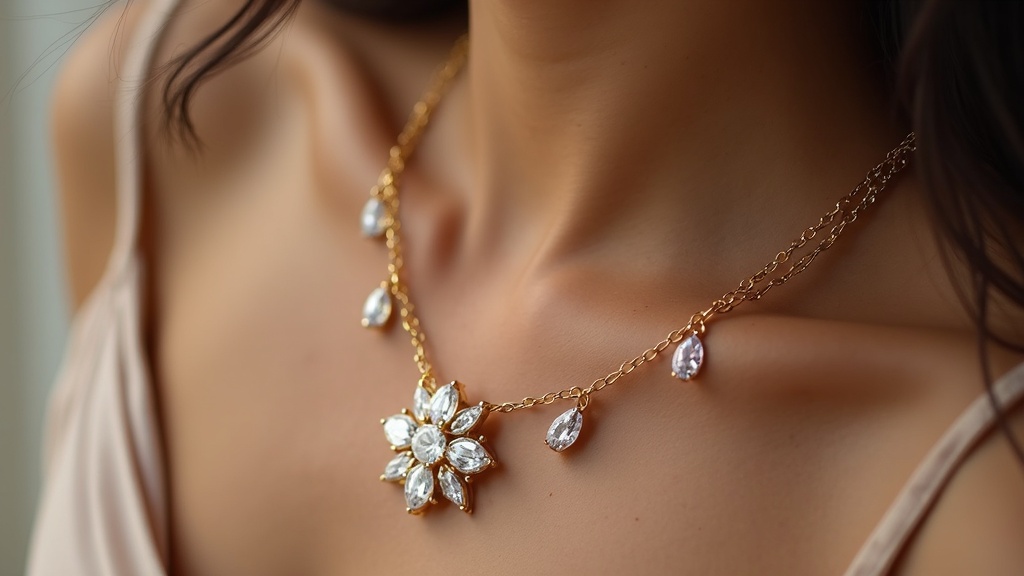
Learn the best ecommerce jewelry store tips to boost online sales, build customer trust, and increase conversions with proven strategies for product pages, photography, and marketing.
Table of Contents
- Optimizing Your Product Pages for Conversions
- Mastering Product Photography and Visual Presentation
- Building Trust Through Reviews, Policies, and Social Proof
- Leveraging Targeted Marketing and Personalization
- Frequently Asked Questions
- Comparison of Key Strategies for Your Ecommerce Jewelry Store
- Practical Tips for Implementing These Strategies
- Final Thoughts on best ecommerce jewelry store tips
- Useful Resources
Best ecommerce jewelry store tips focus on optimizing product pages with detailed descriptions and trust signals, using high-quality photography, and leveraging personalized marketing to convert high-intent shoppers into loyal customers.
- 87% of online jewelry shoppers say high-quality product images significantly influence their purchase decision (Baymard Institute, 2025)[1]
- The abandonment rate of shopping carts in online fashion and jewelry stores is 69.8% (Baymard Institute, 2025)[2]
- Online jewelry ecommerce brands that use personalized email marketing see a 27% increase in repeat purchase rate (Klaviyo, 2025)[3]
Running a successful online jewelry business requires more than just listing products. The best ecommerce jewelry store tips combine strategic product page optimization, stunning visuals, and a deep understanding of customer behavior to turn browsers into buyers. In a market where 62% of online jewelry buyers research at least three sites before purchasing (Deloitte, 2025)[4], standing out with a polished, trustworthy shopping experience is essential. This guide covers the four core areas that will help your store thrive: product page design, photography, trust-building, and targeted marketing.
Optimizing Your Product Pages for Conversions
Your product page is the digital equivalent of a jewelry display case. To capture high-intent traffic, it must provide all the information a shopper needs to make a confident decision. As Neil Patel, co-founder of NP Digital, notes, “For ecommerce jewelry brands, high-intent traffic comes from detailed product pages with unique descriptions, lifestyle imagery, and clear trust signals like reviews and certifications.”[5] Unique product descriptions are crucial; avoid manufacturer copy and instead write about the piece’s design inspiration, material quality, and how it fits into a wardrobe. Include precise details like metal type (e.g., sterling silver, 14k gold), gemstone carat weight, and dimensions. This reduces uncertainty and answers common questions before they cause hesitation.
Trust signals are equally important. Display customer reviews and ratings prominently. Research shows that online jewelry stores that display reviews see an 18% increase in conversion rate (PowerReviews, 2025)[6]. Additionally, make your return policy, warranty, and shipping information easy to find. 54% of consumers say they will not purchase jewelry from an ecommerce site that does not clearly state return and warranty policies (National Retail Federation, 2025)[7]. A clean, easy-to-navigate layout with high-contrast “Add to Cart” buttons and multiple payment options (including buy-now-pay-later services) can further streamline the purchase journey. For a comprehensive approach to product presentation, explore resources at best jewelrycurrent.
Mastering Product Photography and Visual Presentation
In ecommerce, customers cannot touch or try on jewelry, so your photography must bridge that gap. High-quality images are the single most influential factor for online jewelry shoppers, with 87% stating they significantly affect their purchase decision (Baymard Institute, 2025)[1]. Invest in professional photography that captures the piece from multiple angles, including close-ups of clasps, hallmarks, and gemstone details. Lifestyle images showing the jewelry on a model help customers visualize how it will look when worn, which is a key recommendation from Chase Clymer, co-founder of Electric Eye, who emphasizes the need to “communicate scale, sparkle, and how pieces look when worn”[8].
Video content is also powerful. Short clips of a necklace catching light or a bracelet being clasped can dramatically improve engagement. Consider implementing a virtual try-on feature if your technical resources allow; stores that do so see an average uplift of 2.3 times in time on site (Shopify, 2025)[9]. This extra time spent browsing often translates to higher purchase intent. For stores specializing in specific categories, like silver pieces, a curated visual strategy can be especially effective. You can find examples of this approach in guides on best silver cat jewelry.
Building Trust Through Reviews, Policies, and Social Proof
Trust is the currency of the online jewelry market. Given the high average order value, shoppers need reassurance before committing. The most effective trust-building tools are customer reviews and clearly stated policies. Displaying verified reviews directly on product pages not only provides social proof but also helps with SEO through unique user-generated content. As mentioned, this practice can boost conversion rates by 18% (PowerReviews, 2025)[6]. Make it easy for customers to leave reviews by sending follow-up emails post-purchase.
Your store’s policies are another critical trust signal. Clearly outline your shipping costs, delivery timelines, and return window. 71% of jewelry shoppers say free shipping is a decisive factor when buying from an ecommerce jewelry store (UPS Pulse of the Online Shopper, 2025)[10]. If you cannot offer free shipping on all orders, consider a threshold (e.g., free shipping over $100). A generous return policy (e.g., 30-day returns) also alleviates purchase anxiety. Finally, include trust badges from payment processors (like SSL certificates and PayPal) on the checkout page to reassure customers that their financial data is secure.
Leveraging Targeted Marketing and Personalization
General marketing tactics rarely work for jewelry ecommerce. Instead, focus on understanding your specific audience. Rand Fishkin, co-founder of SparkToro, advises that successful online jewelry retailers “focus less on chasing all possible customers and more on deeply understanding the specific audience that buys from them repeatedly.”[11] Use analytics to identify your top customer segments – whether they are bridal shoppers, gift buyers, or collectors of vintage pieces – and tailor your messaging accordingly.
Personalized email marketing is a proven retention driver. By using browsing and purchase history to send targeted recommendations (e.g., “Complete the look with matching earrings”), jewelry ecommerce brands can increase repeat purchase rates by 27% (Klaviyo, 2025)[3]. Retargeting ads on social media platforms like Instagram and Pinterest are also effective, as these visual channels align perfectly with jewelry marketing. Additionally, consider content marketing strategies such as “how to style” guides or “gift guides by occasion” to attract organic traffic. To further refine your approach, you can explore advanced strategies at jewelrycurrent.com for insights on optimizing your online presence.
What People Are Asking
What is the most important factor for converting visitors on an ecommerce jewelry site?
High-quality product photography is the single most important factor. 87% of online jewelry shoppers say that product images significantly influence their purchase decisions (Baymard Institute, 2025)[1]. Images must be clear, well-lit, and show the piece from multiple angles, including on a model, to help customers visualize size and sparkle.
How can I reduce cart abandonment in my jewelry store?
Cart abandonment in fashion and jewelry stores is 69.8% (Baymard Institute, 2025)[2]. To reduce this, offer free shipping (a decisive factor for 71% of shoppers), clearly display return policies, use exit-intent popups with discounts, and send automated cart recovery emails. Simplifying the checkout process by minimizing form fields also helps.
What marketing strategies work best for online jewelry stores?
Personalized email marketing is highly effective, increasing repeat purchase rates by 27% (Klaviyo, 2025)[3]. Visual platforms like Instagram and Pinterest are ideal for showcasing products. Content marketing, such as styling guides and gift guides, also attracts organic traffic. Focus on understanding your core audience rather than trying to appeal to everyone.
How important are customer reviews for a jewelry ecommerce site?
Customer reviews are crucial. Displaying reviews on product pages can increase conversion rates by 18% (PowerReviews, 2025)[6]. They provide social proof, answer common questions, and build trust. Encourage reviews by following up with customers after purchase and offering a small incentive, like a discount on their next order.
Comparison of Key Strategies for Your Ecommerce Jewelry Store
Different approaches cater to different stages of the customer journey. The table below compares four core strategies, highlighting their primary focus, required investment, and expected impact.
| Strategy | Primary Focus | Investment Level | Expected Impact |
|---|---|---|---|
| Product Page Optimization | Detailed descriptions, trust signals, clear CTAs | Medium (copywriting, design) | Increases conversion rate, reduces returns |
| Professional Photography & Video | High-res images, lifestyle shots, video content | High (photographer, equipment) | Significantly boosts purchase confidence, reduces hesitation |
| Building Trust (Reviews & Policies) | Customer reviews, transparent return/shipping info | Low to Medium (software, policy creation) | Increases conversion by up to 18%, builds brand loyalty |
| Personalized Marketing | Email segmentation, retargeting ads, content | Medium (email platform, ad spend) | Improves repeat purchase rate by 27%, increases LTV |
Practical Tips for Implementing These Strategies
Applying the best ecommerce jewelry store tips requires a systematic approach. Here are actionable steps to get started. First, audit your current product pages. Ensure every listing includes a unique description of at least 100 words, a clear size chart, and at least five high-quality images. Replace any blurry or poorly lit photos immediately. Second, set up a review collection system. Use an app like Yotpo or Judge.me to automate review requests. Respond to both positive and negative reviews publicly to show you value feedback. Third, review your checkout process. Offer guest checkout, multiple payment gateways, and display trust badges. Test the flow yourself on a mobile device, as a large portion of jewelry shopping happens on phones. Fourth, start a simple email segmentation strategy. Tag customers based on their first purchase (e.g., “earring buyer,” “gift buyer”) and send relevant product recommendations. Finally, monitor your analytics weekly. Track metrics like conversion rate, average order value, and cart abandonment rate to see which strategies are working. For a deeper dive into product presentation, consider resources on optimizing silver jewelry pages.
For more about Silver cat jewelry guide, see explore silver cat jewelry guide in depth.
Final Thoughts on best ecommerce jewelry store tips
Mastering the best ecommerce jewelry store tips involves a balanced focus on product presentation, customer trust, and smart marketing. By investing in professional photography, writing detailed product descriptions, clearly communicating your policies, and personalizing your outreach, you can create a shopping experience that converts visitors into loyal customers. The jewelry ecommerce market is growing at 8.1% annually (Statista, 2025)[12], and those who implement these strategies will be best positioned to capture that growth. To explore more strategies for your online store, check out our detailed guide on best jewelrycurrent for further insights.
Useful Resources
- Baymard Institute. 87% of online jewelry shoppers say high-quality product images significantly influence their purchase decision.
https://baymard.com/blog/product-image-quality-jewelry-ecommerce - Baymard Institute. Abandonment rate of shopping carts in online fashion and jewelry stores.
https://baymard.com/lists/cart-abandonment-rate - Klaviyo. Increase in repeat purchase rate for jewelry ecommerce brands that use personalized email marketing.
https://www.klaviyo.com/resources/personalization-effect-on-jewelry-ecommerce-retention - Deloitte. Percentage of online jewelry buyers who research at least three websites before making a purchase.
https://www2.deloitte.com/global/en/pages/consumer-business/articles/jewelry-ecommerce-consumer-journey.html - Neil Patel. How to Increase Conversions for Your Online Jewelry Store.
https://neilpatel.com/blog/online-jewelry-store-conversion-tips - PowerReviews. Increase in conversion rate when online jewelry stores display customer reviews.
https://www.powerreviews.com/resources/impact-of-reviews-on-jewelry-ecommerce - National Retail Federation. Share of consumers who will not purchase jewelry without clear return and warranty policies.
https://nrf.com/research/consumer-trust-and-online-jewelry-purchases - Electric Eye. Design and CRO Tips for Jewelry Brands on Shopify.
https://electriceye.io/blog/jewelry-shopify-conversion-optimization - Shopify. Average uplift in time on site for jewelry ecommerce stores that implement virtual try-on features.
https://www.shopify.com/research/virtual-try-on-impact-jewelry - UPS Pulse of the Online Shopper. Percentage of jewelry shoppers who say free shipping is a decisive factor.
https://www.ups.com/us/en/services/knowledge-center/pulse-of-online-shopper-jewelry.page - SparkToro. Audience-Driven Marketing for Niche Ecommerce Brands.
https://sparktoro.com/blog/audience-driven-marketing-for-ecommerce - Statista. Projected annual growth rate of online jewelry sales between 2024 and 2028.
https://www.statista.com/statistics/online-jewelry-sales-growth-worldwide