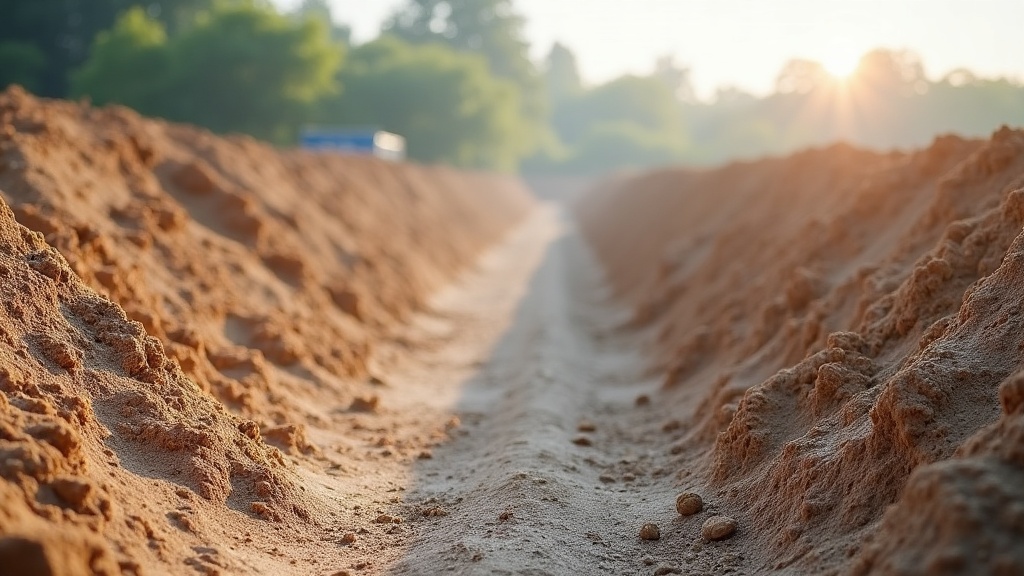
Learn how proper foundation backfill supports mining infrastructure and prevents costly structural failures. This guide covers materials, compaction standards, testing protocols, and emerging trends in engineered backfill for underground and surface operations.
Table of Contents
- What Is Foundation Backfill?
- Materials and Compaction Standards
- Testing and Inspection Requirements
- Emerging Trends in Backfill Technology
- Frequently Asked Questions
- Comparison of Backfill Approaches
- Practical Tips for Foundation Backfill
- Final Thoughts on Foundation Backfill
- Further Reading
Key Takeaway: Foundation backfill is the engineered process of replacing excavated soil against a foundation wall or footing to provide lateral support, improve drainage, and prevent structural shifting. Proper compaction, material selection, and testing are critical for long-term stability in mining and construction projects.
Market Snapshot
- Mine backfill services market projected to increase from US$4.1 billion in 2024 to US$6.8 billion by 2031 (Persistence Market Research, 2024)[1]
- Global foundation repair services market expected to reach US$4.1 billion by 2033, growing at a 4.6% CAGR from 2026 to 2033 (Persistence Market Research, 2024)[2]
- Residential projects commonly require 90 to 95 percent of Standard Proctor; commercial projects frequently specify 95 percent of Modified Proctor for foundation backfill compaction (Foundation Authority, 2023)[3]
Foundation backfill is a critical step in any construction project involving below-grade structures. Whether you are building a residential basement, a commercial retaining wall, or a mining shaft, the soil placed against the foundation must be carefully selected, placed, and compacted. Poorly executed backfill can lead to lateral wall pressure, water infiltration, settlement, and even structural failure. This guide provides a comprehensive overview of foundation backfill best practices, drawing on industry standards and recent market data to help you make informed decisions.
What Is Foundation Backfill?
Foundation backfill refers to the replacement of soil that was excavated during foundation construction. After concrete or masonry walls have cured sufficiently, the void space around the foundation is filled with engineered material. This material must provide adequate lateral support, facilitate drainage away from the structure, and resist long-term settlement. In mining contexts, backfill is also used to stabilize underground voids and support surface infrastructure such as headframes, crusher stations, and conveyor foundations.
The process involves more than simply pushing dirt back into a hole. Proper foundation backfill requires knowledge of soil mechanics, compaction testing, and material specification. The backfill material must be free of organic matter, large rocks, and debris that could create voids or impede compaction. Granular soils such as sand and gravel are often preferred because they drain well and compact predictably. Cohesive soils like clay can be used but require careful moisture control and may need additional drainage measures.
According to the Foundation Authority Editorial Team, “Backfill is the engineered replacement of excavated soil against a foundation wall, footing, or basement structure once concrete has reached adequate cure strength” (Foundation Authority, 2023)[3]. This definition underscores the engineering intent behind backfill: it is not a cosmetic step but a structural one. The DOZR Construction Equipment Experts add that “backfilling is important because it provides lateral support to foundations, improves drainage and soil compaction, and prevents foundation shifting or settling” (DOZR, 2024)[4].
Materials and Compaction Standards
Selecting Backfill Material
The choice of backfill material depends on the soil type at the site, the foundation design, and the required drainage characteristics. Well-graded granular materials (GW, GP, SW, SP under the Unified Soil Classification System) are generally preferred for their high shear strength and good drainage. These materials compact to a dense state that resists settlement and provides excellent lateral support.
For mining applications, backfill materials may include crushed rock, tailings, or cemented paste backfill. Cemented backfill adds binder (typically Portland cement or fly ash) to create a self-supporting mass that can be placed in underground stopes or around surface foundations. This approach is particularly useful when the backfill must bear structural loads or resist groundwater pressure.
Compaction Requirements
Compaction is the process of mechanically densifying soil to reduce void space and increase load-bearing capacity. The degree of compaction is measured as a percentage of the maximum dry density achieved in a standard laboratory test (Standard Proctor or Modified Proctor). The Foundation Authority Editorial Team notes that “residential projects commonly require 90 to 95 percent of Standard Proctor; commercial projects frequently specify 95 percent of Modified Proctor for foundation backfill compaction” (Foundation Authority, 2023)[3]. Mining infrastructure projects typically fall under the commercial category and may require even higher densities depending on the design loads.
Lift thickness is another critical factor. Backfill should be placed in lifts no thicker than 6 to 12 inches for hand-operated compactors, or up to 18 inches for heavy vibratory rollers. Each lift must be compacted to the specified density before the next lift is placed. Skipping lifts or using excessive lift thickness is a common cause of settlement problems.
Testing and Inspection Requirements
Verifying that backfill meets specification is essential for long-term performance. The Prince William County Government Building Development Division provides a clear framework: “If the foundation wall is designed for a 30 or 45 psf soil lateral pressure per foot height of wall, the in-place backfill must be tested in two locations on each side of the house where backfill was placed” (Prince William County Government, 2024)[5]. This requirement ensures that the backfill achieves the design assumptions used by the structural engineer.
Testing typically involves field density tests such as the sand cone method, nuclear densometer, or rubber balloon method. These tests measure the in-place density of the compacted soil and compare it to the maximum dry density determined in the laboratory. The same guidance states that “at least two samples from the stockpile shall be tested by an accredited testing laboratory, and the results must be attached to the Building Inspection Certification Form certified by an approved Third Party Engineer” (Prince William County Government, 2024)[5].
For large mining projects, testing frequency is often specified in the quality control plan. A common rule of thumb is one density test per 500 cubic yards of backfill placed, or per lift, whichever is more frequent. All test results should be documented and reviewed by the project engineer before backfill operations proceed to the next lift.
Emerging Trends in Backfill Technology
The foundation backfill industry is evolving, driven by larger infrastructure projects, stricter environmental regulations, and the need for more predictable performance. The mine backfill services market is projected to increase from US$4.1 billion in 2024 to US$6.8 billion by 2031, reflecting growing use of engineered backfill in underground and foundation-support contexts (Persistence Market Research, 2024)[1]. This growth is fueled by the expansion of underground mining and the need for stable foundations in challenging geotechnical conditions.
One notable trend is the increasing use of geosynthetic reinforcement in backfill. Geogrids and geotextiles can be placed within backfill lifts to improve tensile strength and reduce differential settlement. This approach is particularly valuable when backfilling against tall retaining walls or in areas with poor native soils.
Another development is the adoption of real-time compaction monitoring. Instrumented rollers equipped with GPS and accelerometers can map compaction levels across the entire backfill area, providing continuous quality assurance rather than relying solely on discrete spot tests. This technology reduces the risk of under-compacted zones that could later cause settlement.
The global foundation repair services market is also expanding, with projections reaching US$4.1 billion by 2033 (Persistence Market Research, 2024)[2]. This growth includes services related to foundation backfill repair and stabilization, such as helical piers, slab jacking, and chemical grouting. For mining operations, understanding these techniques is essential when foundation backfill needs to be remediated due to settlement or poor initial compaction.
Frequently Asked Questions
What is the difference between backfill and fill?
Backfill refers specifically to material placed against a foundation wall or structure after construction, while fill is a broader term for any soil placed to raise grade or create embankments. Backfill must meet stricter compaction and material requirements because it provides lateral support to the foundation. Fill used in other areas may have less stringent specifications.
Can I use native soil for foundation backfill?
Native soil can be used if it meets the project’s material specifications. It must be free of organic matter, debris, and rocks larger than 4 inches in diameter. Highly plastic clays or expansive soils should be avoided because they can swell when wet and shrink when dry, causing foundation movement. A geotechnical engineer should evaluate the native soil before use.
How long should concrete cure before backfilling?
Concrete should cure for a minimum of 7 days before backfilling, though some specifications require 14 days for full strength development. The exact duration depends on the concrete mix design, ambient temperature, and wall height. Backfilling too early can damage uncured concrete or cause cracks. Always consult the structural engineer’s recommendations.
What happens if foundation backfill is not compacted properly?
Improper compaction can lead to several problems including differential settlement of the foundation, cracking of walls or slabs, water pooling against the foundation, and reduced lateral support. Over time, settlement can cause structural damage that requires expensive repairs. Proper compaction testing during construction prevents these issues.
Comparison of Backfill Approaches
Different projects call for different backfill strategies. The table below compares three common approaches used in construction and mining.
| Approach | Material | Compaction Target | Best For |
|---|---|---|---|
| Granular Backfill | Sand, gravel, crushed stone | 95% Standard Proctor | Residential foundations, drainage-critical areas |
| Engineered Fill | Select native soil, possibly amended | 95% Modified Proctor | Commercial buildings, mining infrastructure |
| Cemented Paste Backfill | Tailings + binder (cement/fly ash) | Self-supporting; no compaction needed | Underground mine stopes, reinforced foundations |
Each approach has trade-offs in cost, performance, and environmental impact. Granular backfill is often the most economical for shallow foundations, while cemented paste backfill offers superior strength for deep mining applications.
Practical Tips for Foundation Backfill
- Test before you backfill. Have the proposed backfill material tested for gradation, plasticity, and compaction characteristics before placing it. This avoids costly rework if the material fails to meet specifications.
- Control moisture content. The moisture content of the backfill material should be within 2% of the optimum moisture content determined by the Proctor test. Too dry, and the soil won’t compact; too wet, and it may become unstable.
- Use proper equipment. Choose compaction equipment based on lift thickness and material type. Vibratory plate compactors work well for granular soils, while sheepsfoot rollers are better for cohesive soils. Avoid using heavy equipment too close to foundation walls to prevent damage.
- Install drainage systems. Include perforated drain pipes and gravel French drains at the base of the foundation to direct water away from the structure. Proper drainage is as important as compaction for long-term foundation performance.
- Document everything. Keep detailed records of material test results, compaction test locations, lift thicknesses, and weather conditions. This documentation is invaluable if future settlement issues arise.
For those in the mining sector, exploring trenching and backfilling best practices can provide additional insights into site preparation and material handling. Professional certification programs also offer advanced training in geotechnical quality control.
Final Thoughts on Foundation Backfill
Foundation backfill is a deceptively simple operation that has profound consequences for structural performance. By selecting appropriate materials, achieving specified compaction, and verifying results through testing, you can prevent settlement, cracking, and drainage problems that plague poorly backfilled foundations. The growing market for engineered backfill solutions reflects the industry’s recognition that backfill is not an afterthought but a critical engineering element. Whether you are managing a residential project or a large mining operation, investing in proper foundation backfill pays dividends in safety and longevity. For more detailed guidance on backfill specifications and testing protocols, review the resources listed below.
Further Reading
- Mine Backfill Services Market to Hit US$6.8 Bn by 2031. Persistence Market Research.
https://www.openpr.com/news/4005573/mine-backfill-services-market-to-hit-us-6-8-bn-by-2031 - Foundation Repair Services Market. Persistence Market Research.
https://www.persistencemarketresearch.com/market-research/foundation-repair-services-market.asp - Foundation Backfill: Materials, Compaction, and Settlement. Foundation Authority.
https://foundationauthority.com/foundation-backfill/ - What is Backfilling and How It Shapes Construction Projects. DOZR.
https://dozr.com/blog/what-is-backfilling - Foundation Backfill – Building Development Division Guidance. Prince William County Government.
https://www.pwcva.gov/assets/2024-02/PP-FoundationBackfill.pdf