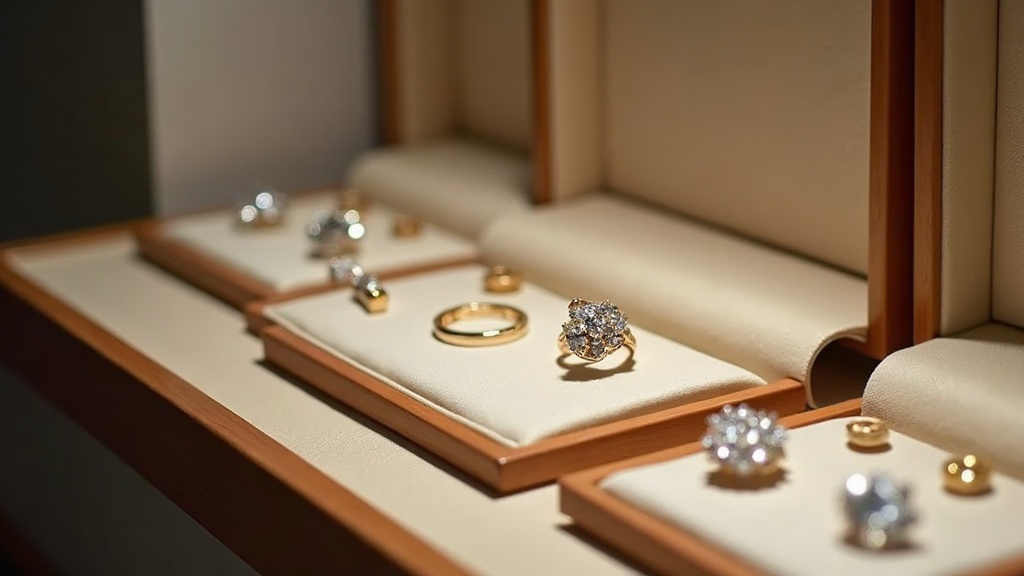
Learn what makes the best ecommerce jewelry store overview stand out in a competitive market. Discover key strategies for building trust, optimizing product pages, and leveraging mobile traffic to boost sales for your online jewelry business.
Table of Contents
- What Defines the Best Ecommerce Jewelry Store
- Building Trust in Your Online Jewelry Store
- Optimizing Product Pages and Visual Merchandising
- Mobile-First Strategies for Jewelry Ecommerce
The best ecommerce jewelry store overview is one that prioritizes trust, high-quality visuals, and mobile optimization. With online jewelry sales projected to hit 88.6 billion dollars by 2027, success hinges on treating your website like a flagship store and using data-driven strategies to convert hesitant buyers.
- Global online jewelry sales are projected to reach 88.6 billion dollars by 2027 (Statista, 2024)[1]
- 73 percent of jewelry consumers research products online before purchasing (De Beers Group, 2024)[2]
- Cart abandonment rates for online jewelry stores average around 79 percent (Baymard Institute, 2025)[3]
The jewelry industry is undergoing a profound digital shift. As more consumers move online to browse and buy, the difference between a thriving ecommerce jewelry store and one that struggles often comes down to a few critical factors: trust, visual presentation, and mobile readiness. This best ecommerce jewelry store overview examines the core elements that define successful online jewelry businesses, from product page optimization to checkout design. Whether you are launching a new store or refining an existing one, the insights here will help you align your strategy with what today’s jewelry buyers expect.
What Defines the Best Ecommerce Jewelry Store
The best ecommerce jewelry store is not simply a website that lists products. It is a carefully crafted digital environment that replicates the confidence and delight of an in-person boutique. Parag Barot, Founder & CEO of GemFind Digital Solutions, captures this idea well: “In jewelry e‑commerce, the brands that win are those that treat their website like a flagship store – investing in photography, UX, and trust signals so customers feel confident buying high‑value pieces online.”[4] This philosophy underpins every successful online jewelry business.
Key Characteristics of Top Performers
Several traits separate high-converting jewelry stores from the rest. First, they invest heavily in product imagery. Research from the Baymard Institute shows that product pages with high-quality zoomable images and 360-degree views can increase conversion rates by up to 30 percent compared with basic imagery.[5] Second, they prioritize clear, accessible information about certifications, metal authenticity, and return policies. According to Jewelers of America, approximately 54 percent of online jewelry shoppers say clear information about certifications and metal authenticity is a decisive factor in choosing an ecommerce jewelry store.[6] Third, the best stores make navigation intuitive, with robust filtering by metal type, gemstone, price range, and style.
Platform choice also plays a role. Devanshi Patel, Ecommerce Strategist at Abbacus Technologies, notes: “For most jewelry brands, Shopify remains the gold standard because its ecosystem of apps makes it easy to add storytelling, visual merchandising, and conversion optimization without custom development.”[7] However, Patel also advises that small, design-driven jewelry brands often achieve the best results by choosing platforms that support rich storytelling and SEO rather than chasing every feature.[8] The key is matching platform capabilities to your brand’s specific needs.
Building Trust in Your Online Jewelry Store
Trust is the currency of the jewelry business. When customers cannot touch, hold, or try on a piece before buying, every element of your website must work to overcome that hesitation. Parag Barot emphasizes: “The best-performing online jewelry stores are laser-focused on building trust – they highlight certifications, clear policies, and social proof on every product page to overcome the hesitation of buying fine jewelry sight unseen.”[4] This is not optional; it is foundational.
Trust Signals That Convert
Several specific trust signals have been shown to reduce cart abandonment and increase purchase confidence. Trust badges and clear return policies can reduce cart abandonment on jewelry ecommerce sites by up to 17 percent compared with similar sites that lack visible trust elements.[9] These signals include third-party security seals, money-back guarantees, and prominently displayed customer service contact information. Additionally, including detailed product descriptions that explain gemstone quality, metal purity, and craftsmanship helps educate the buyer and builds credibility.
Social proof is equally powerful. Customer reviews, user-submitted photos, and testimonials from verified buyers provide the reassurance that others have had positive experiences. For a best silver cat jewelry collection, for example, showing real customer photos wearing the pieces can dramatically increase trust and engagement. The same principle applies across all categories. Angela Busby, Director of Digital Tools at Stuller Inc., reminds sellers: “Jewelry sellers who succeed online are the ones who treat e-commerce as an extension of their bench – they plan for ongoing maintenance, digital marketing, and inventory accuracy instead of seeing the site as a one‑time project.”[10] Trust is built through consistency over time, not a single design choice.
Optimizing Product Pages and Visual Merchandising
Product pages are the heart of any ecommerce jewelry store. They must function as a digital salesperson, answering every question a buyer might have while creating an emotional connection to the piece. The statistics are clear: 73 percent of jewelry consumers research products online before making a purchase,[2] which means your product pages must be comprehensive enough to satisfy that research without overwhelming the shopper.
Visuals That Sell
High-quality imagery is non-negotiable. The 30 percent conversion lift from zoomable and 360-degree images[5] demonstrates that shoppers need to see every angle and detail before committing. Virtual try-on and augmented reality tools take this further. Data from Shopify indicates that offering virtual try-on or AR visualization tools can lift online jewelry conversion rates by between 20 and 25 percent versus stores without such features.[11] While these tools require investment, the return in reduced returns and increased average order value often justifies the cost.
Beyond visuals, product pages should include detailed specifications: carat weight, metal type, gemstone clarity, dimensions, and chain length. Lifestyle images showing the jewelry on a model help buyers visualize scale and style. For stores like those featured in a best jewelrycurrent guide, combining technical specs with aspirational photography creates a compelling shopping experience. Mobile optimization is critical here, as more than half of jewelry shoppers begin their journey on a phone.
Mobile-First Strategies for Jewelry Ecommerce
Mobile devices account for about 65 percent of traffic to jewelry ecommerce sites, according to Adobe Digital Insights.[12] This statistic alone should make mobile optimization the top priority for any online jewelry store. A mobile-first approach means designing for small screens first and then scaling up, rather than shrinking a desktop layout to fit a phone.
Designing for the Small Screen
On mobile, every second counts. Page load speed is critical; a delay of even one second can reduce conversions significantly. Images must be compressed without sacrificing quality, and navigation should be thumb-friendly with large, tappable buttons. The checkout process must be streamlined, ideally with one-click payment options like Apple Pay or Google Pay. Given that cart abandonment rates for online jewelry stores average around 79 percent,[3] reducing friction at checkout is a high-leverage opportunity.
Mobile product pages should prioritize the most important information: price, images, and the “Add to Cart” button. Secondary details like shipping policies and certifications can be placed in expandable sections. Swipeable image galleries work well on mobile, allowing shoppers to browse multiple views quickly. For brands that want to take their mobile experience further, integrating with professional ecommerce SEO services can help ensure that mobile pages are not only fast but also discoverable in search results. The goal is to make the mobile shopping experience feel effortless, removing any reason for the buyer to leave and complete the purchase elsewhere.
Important Questions About Ecommerce Jewelry Store
What is the best platform for starting an ecommerce jewelry store?
Shopify is widely recommended by industry experts for its app ecosystem and ease of use. Devanshi Patel notes that Shopify remains the gold standard because its apps make it easy to add storytelling and conversion tools without custom development. However, the best platform depends on your specific needs. Small, design-driven brands may prefer platforms that prioritize rich storytelling and SEO. Evaluate your budget, technical skills, and desired features before choosing.
How can I reduce cart abandonment in my jewelry store?
Cart abandonment rates for jewelry stores average around 79 percent. To reduce this, focus on trust signals like security badges and clear return policies, which can cut abandonment by up to 17 percent. Streamline your checkout process, offer multiple payment options, and provide transparent shipping costs early in the journey. Abandoned cart email sequences that remind shoppers and offer a small incentive can also recover lost sales.
What product images work best for online jewelry sales?
High-quality zoomable images and 360-degree views are proven to increase conversion rates by up to 30 percent compared with basic photos. Lifestyle shots showing the jewelry on a model help customers visualize scale and style. Virtual try-on and AR tools can lift conversions by an additional 20 to 25 percent. Always use multiple angles, close-ups of details, and images that accurately represent color and sparkle.
How important is mobile optimization for a jewelry ecommerce site?
Mobile optimization is critical. Mobile devices account for about 65 percent of traffic to jewelry ecommerce sites. A mobile-first design that prioritizes fast load times, thumb-friendly navigation, and a streamlined checkout is essential. Given that 73 percent of jewelry shoppers research products online before buying, a poor mobile experience can drive potential customers to competitors. Test your site on multiple devices regularly.
Comparison: Shopify vs. WooCommerce for Jewelry Stores
Choosing the right ecommerce platform is one of the most consequential decisions for a jewelry brand. Two of the most popular options are Shopify and WooCommerce, each with distinct strengths. The table below compares them across key factors relevant to jewelry sellers.
| Feature | Shopify | WooCommerce |
|---|---|---|
| Ease of Setup | Turnkey, minimal technical skills required | Requires WordPress hosting and setup |
| Visual Merchandising Apps | Extensive app store for 360° views, AR, zoom | Plugins available but may need more customization |
| Mobile Optimization | Responsive themes built-in | Depends on theme and plugin choices |
| Transaction Fees | Fees apply unless using Shopify Payments | No platform fees, but payment gateway fees apply |
| SEO Capabilities | Good, but less flexible than WooCommerce | Excellent with WordPress SEO plugins |
Both platforms can support a successful jewelry store. Shopify offers convenience and a rich ecosystem of jewelry-specific apps, while WooCommerce provides greater customization and SEO flexibility for those comfortable with WordPress. Your choice should align with your technical comfort, budget, and long-term growth plans.
Practical Tips for Your Ecommerce Jewelry Store
Building a standout online jewelry store requires attention to detail across multiple areas. Here are actionable tips to improve your store’s performance:
- Invest in professional photography. High-quality images are the single most impactful investment you can make. Include zoom, 360-degree views, and lifestyle shots to reduce uncertainty and boost conversions.
- Make trust signals visible. Display certifications, return policies, and security badges prominently on product pages and during checkout. This can reduce cart abandonment and increase average order value.
- Optimize for mobile first. With 65 percent of traffic coming from phones, ensure your site loads quickly, buttons are easy to tap, and the checkout flow is seamless on small screens.
- Use data to guide decisions. Track metrics like cart abandonment rate, conversion rate by device, and top-performing products. Use this data to refine your product pages, marketing, and user experience continuously.
Staying current with trends is also vital. For example, incorporating AR try-on tools is becoming more accessible and can give you a competitive edge. Regularly audit your site for broken links, outdated information, and slow-loading pages to maintain a professional experience.
For more about Best jewelry gifts for cat enthusiasts, see learn more about best jewelry gifts for cat enthusiasts.
Final Thoughts on Ecommerce Jewelry Store
The best ecommerce jewelry store overview reveals that success is built on a foundation of trust, exceptional visuals, and mobile-first design. With the online jewelry market growing rapidly, the opportunity for well-executed stores is significant. By investing in the strategies outlined here – from high-quality product photography to clear trust signals – you can create a shopping experience that converts browsers into loyal customers. To take the next step in refining your online presence, explore the detailed guides and resources available on best jewelrycurrent to stay ahead of industry trends and consumer expectations.
Useful Resources
- Online jewelry sales worldwide. Statista.
https://www.statista.com/forecasts/997779/online-jewelry-sales-worldwide - Diamond Insight Report 2024. De Beers Group.
https://www.debeersgroup.com/reports/diamond-insight-report-2024 - Cart Abandonment Rate Statistics. Baymard Institute.
https://baymard.com/lists/cart-abandonment-rate - Top 10 Jewelry E-commerce Websites 2026. GemFind.
https://gemfind.com/blogs/web-design/slugjewelry-e-commerce-websites-complete-guide - Product Images & Conversion Research. Baymard Institute.
https://baymard.com/research/product-images-ecommerce-jewelry - Jewelry Consumer Survey 2024. Jewelers of America.
https://www.jewelers.org/benefits/jewelry-consumer-survey-2024 - Best Ecommerce Platform for Jewelry Business. Abbacus Technologies.
https://www.abbacustechnologies.com/best-ecommerce-platform-for-jewelry-business/ - Best Ecommerce Platform for Selling Jewelry Online. Abbacus Technologies.
https://www.abbacustechnologies.com/best-ecommerce-platform-for-selling-jewelry-online-features-pricing-breakdown/ - Trust Signals in Ecommerce. Nielsen Norman Group.
https://www.nngroup.com/articles/trust-signals-ecommerce-jewelry - Choosing the Right E-Commerce Platform. Stuller Blog.
https://blog.stuller.com/choosing-the-right-e-commerce-platform-to-start-selling-jewelry-online/ - AR Virtual Try-On Jewelry Conversion. Shopify.
https://www.shopify.com/research/ar-virtual-try-on-jewelry-conversion - Adobe Digital Economy Index – Jewelry 2025. Adobe Digital Insights.
https://business.adobe.com/resources/reports/adobe-digital-economy-index-jewelry-2025.html